12 Unforgettable Things to Do in Bangkok: A Local's 2026 Guide
If you ask anyone on our NHP team what makes Bangkok so addicting to live in, the answer is always the contrast. In the morning, you can be having coffee in a quiet 200-year-old temple courtyard, and by evening, you are sipping drinks on a 60th-floor rooftop overlooking Sukhumvit. Whether you are visiting Bangkok for a week or scouting neighborhoods to rent your first condo, navigating this city can feel overwhelming at first. Between the roar of tuk-tuks, the midday heat, and the sprawling web of alleyways (sois), it is hard to know where to begin. To help you hit the ground running, we put together this comprehensive, 3,600+ word local guide to the 12 best things to do in Bangkok, written directly from our team's daily experience living and working in the Thai capital.
In this guide:
- 1. The Grand Palace & Wat Phra Kaew
- 2. Reclining Buddha & Traditional Thai Massage at Wat Pho
- 3. Sunset Over the River at Wat Arun
- 4. Panoramic Skyline Views at Wat Saket
- 5. The Giant Bronze Buddha at Wat Paknam Phasi Charoen
- 6. Get Lost in Chatuchak Weekend Market
- 7. Yaowarat Chinatown Street Food Night Safari
- 8. Jodd Fairs Night Market for Trendy Eats & Volcano Ribs
- 9. Khlong Lat Mayom Floating Market & Canal Boat Tour
- 10. Maeklong Railway Market (The Folding Umbrella Market)
- 11. IconSiam & SookSiam: Indoor Floating Market & Luxury
- 12. Chao Phraya River Evening Dinner Cruise
- 13. Practical Travel Tips & Etiquette
The Grand Palace & Wat Phra Kaew
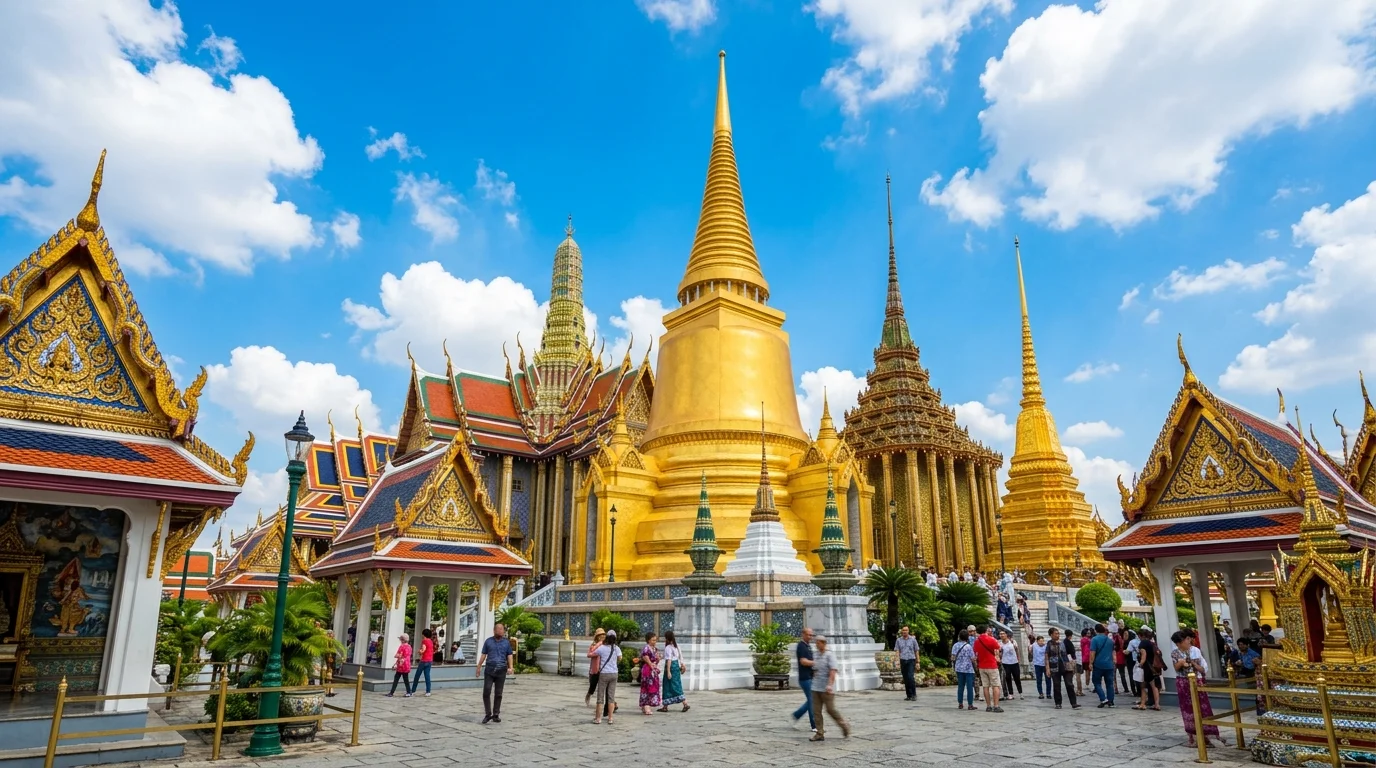
Even if you are usually skeptical of major tourist sites, the Grand Palace complex is worth every single baht. Established in 1782 by King Rama I when he shifted the capital across the Chao Phraya River to Rattanakosin Island, this 218,000-square-meter architectural marvel served as the official residence of the Kings of Siam for generations. Today, it remains the ceremonial heart of the Thai Kingdom.
Inside the outer walls lies Wat Phra Kaew, universally recognized as Thailand's most sacred Buddhist temple. Housed within its golden ordination hall (ubosot) sits the Emerald Buddha (Phra Kaew Morakot). Despite its famous title, the statue is actually meticulously carved from a single block of deep green jasper, standing 66 centimeters tall. It sits high upon an elevated golden altar, and in a sacred tradition preserved for centuries, His Majesty the King personally changes the statue's golden robes three times a year to mark the change of Thailand's seasons (summer, rainy, and cool).
What we love most about wandering through the courtyard is taking in the craftsmanship: the towering multi-tiered golden chedis piercing the sky, the 5-meter tall yaksha guardian demon statues standing sentinel over the gateways, and the intricate Ramakien gallery murals painted along the surrounding walls.
Our Honest Expat Tip: Show up at 8:15 AM before the gates open at 8:30 AM. By 10:30 AM, the heat and tour buses get intense. Most importantly, ignore anyone standing outside the main entrance who tells you 'the palace is closed for a royal event today.' This is one of Bangkok's oldest scams designed to funnel you into an overpriced tuk-tuk tour to gem stores and tailor shops. The palace is virtually never closed.
Dress Code & Transport: Strict attire rules apply. Both men and women must cover shoulders and knees completely (no sheer leggings, shorts, or tank tops). Entry is 500 THB per person. To get there, take the Chao Phraya Express Boat to Tha Chang Pier (N9), or take the MRT Blue Line to Sanam Chai Station followed by a 10-minute walk past Sanam Luang park.
Reclining Buddha & Traditional Thai Massage at Wat Pho
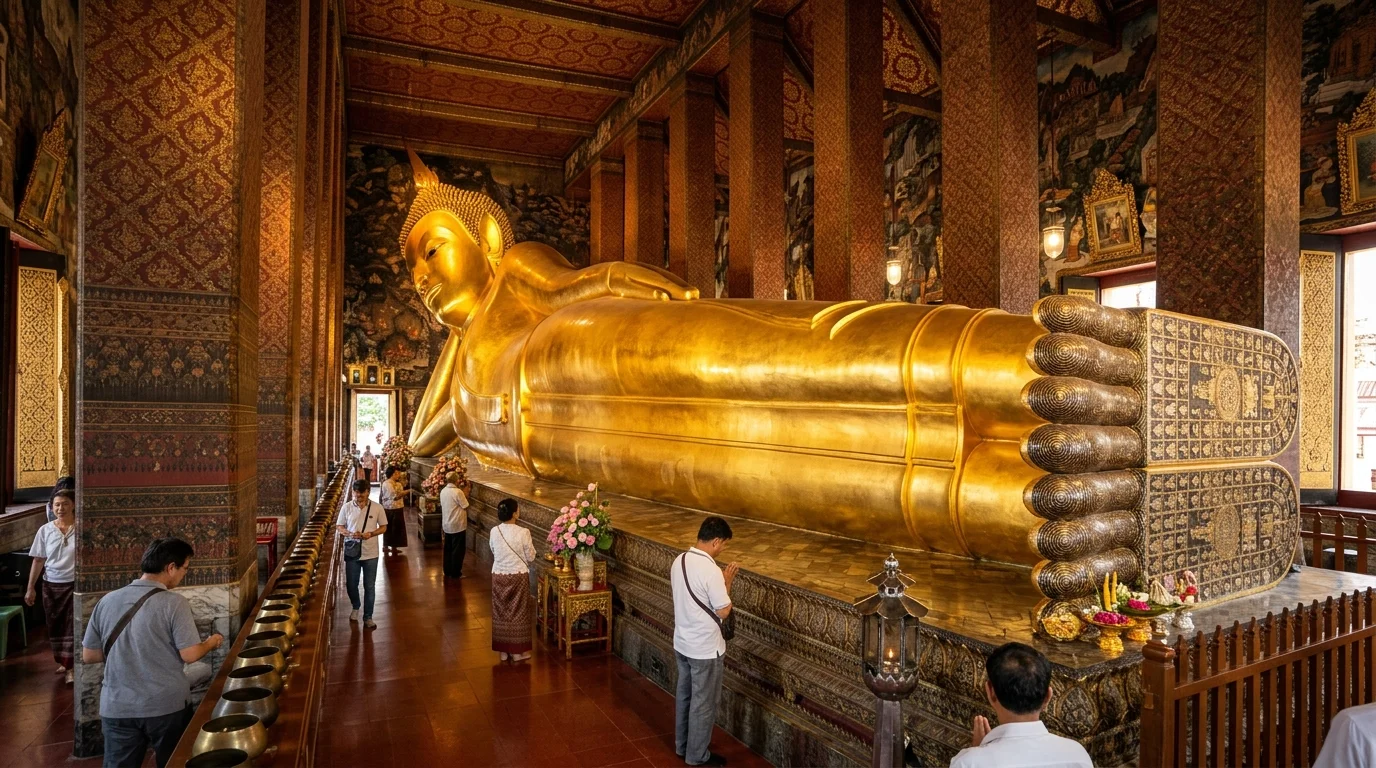
Located just a 5-minute walk south of the Grand Palace sits Wat Pho (officially Wat Phra Chetuphon Wimon Mangkhalaram). Pre-dating the founding of modern Bangkok, Wat Pho is one of the city's largest and oldest temple complexes. It is famous world-wide for housing the breathtaking Reclining Buddha statue.
Measuring an incredible 46 meters long and 15 meters high, the giant gold-leaf statue represents Lord Buddha entering final nirvana. The feet alone measure 5 meters long and are inlaid with mother-of-pearl detailing the 108 auspicious characteristics of a true Buddha. As you walk along the wooden walkway behind the statue, you will hear the soothing, rhythmic clinking of copper coins dropped into 108 bronze alms bowls—a popular ritual for visitors seeking good karma.
Beyond the giant Buddha, Wat Pho is revered as Thailand's first public university and the historical birthplace of Traditional Thai Massage (Nuad Thai). Stone inscriptions and anatomical plaques carved into the courtyard walls served as early educational guides for medicine and yoga posture.
Our Honest Expat Tip: Tucked away in the quiet rear courtyard of the temple is the Wat Pho Thai Traditional Medical School. Skip expensive hotel spas and get a massage right here from master practitioners trained in ancient acupressure techniques. A 1-hour traditional Thai body massage costs around 420 THB and works miracles after a long day of walking.
Practical Info: Entry is 300 THB, open daily from 8:00 AM to 6:30 PM. The easiest way to arrive is taking the MRT Subway to Sanam Chai Station (Exit 1), which deposits you right outside the temple gates along Maha Rat Road.
Sunset Over the River at Wat Arun
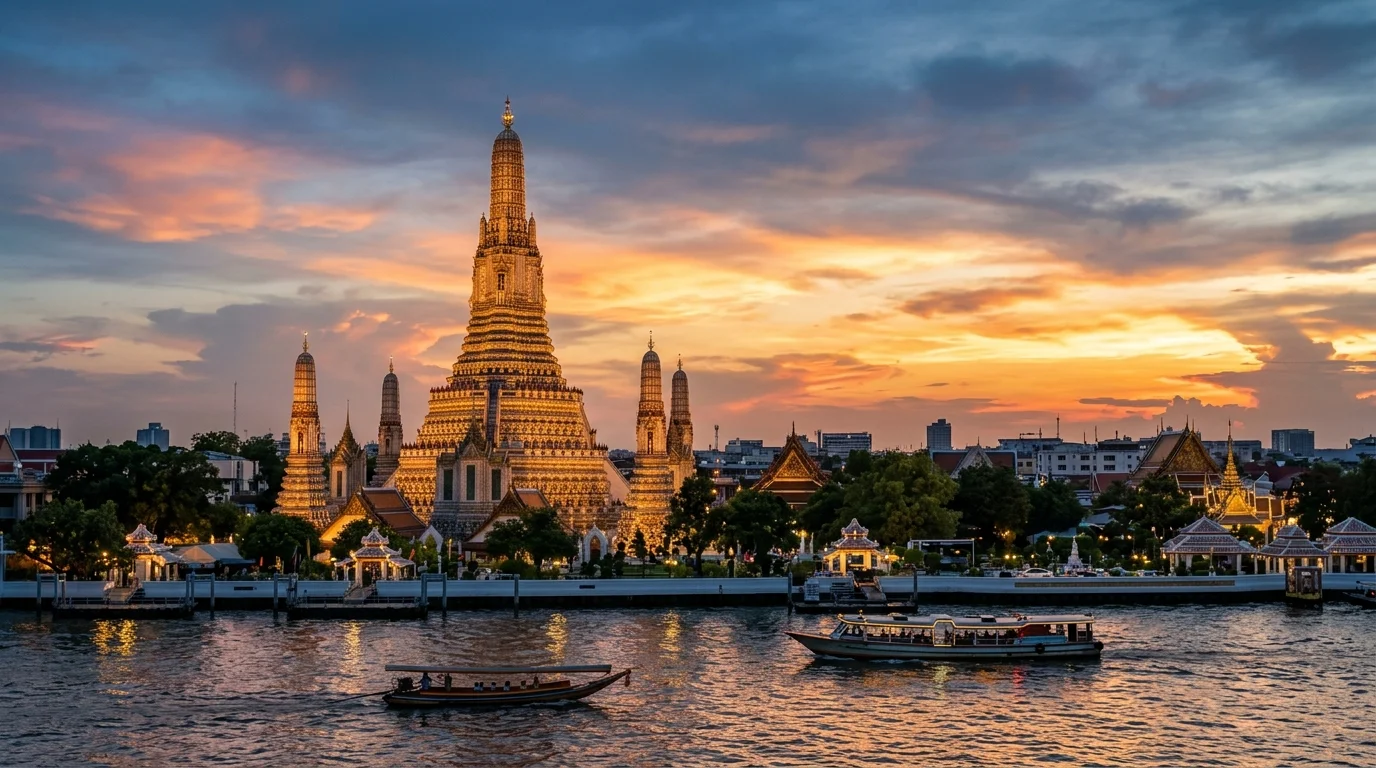
Standing gracefully on the western Thonburi bank of the Chao Phraya River, Wat Arun (The Temple of Dawn) is perhaps Bangkok's most recognizable landmark. Named after Aruna, the Hindu deity of dawn, the temple gained central importance during King Taksin's reign after the fall of Ayutthaya.
Unlike traditional Thai temples with sloping red and gold roofs, Wat Arun features a striking 70-meter central Khmer-style tower (prang). The entire structure is encrusted with millions of fragments of colorful Chinese porcelain and sea shells. Legend has it that these porcelain pieces were salvaged from Chinese merchant vessels that used them as heavy ship ballast when trading along the river in the 1800s.
During the day, you can pay 200 THB to enter the grounds and climb the steep, narrow stone steps of the central spire to admire the porcelain flower mosaics up close. However, the absolute highlight of Wat Arun comes at dusk.
Our Honest Expat Tip: For the best view in the city, cross over to the eastern riverbank along Soi Riva Tha Tien around 5:15 PM. Grab a table at a rooftop bar like Sala Rattanakosin, Eagle Nest, or Supanniga Eating Room. As the sun dips behind Thonburi, warm golden spotlights illuminate Wat Arun's spires against the dusk sky, creating a postcard reflection across the Chao Phraya.
Getting There: Take the Chao Phraya Express Boat to Tha Tien Pier (N8), then take the 5-Baht cross-river shuttle boat directly to Wat Arun Pier.
Panoramic Skyline Views at Wat Saket
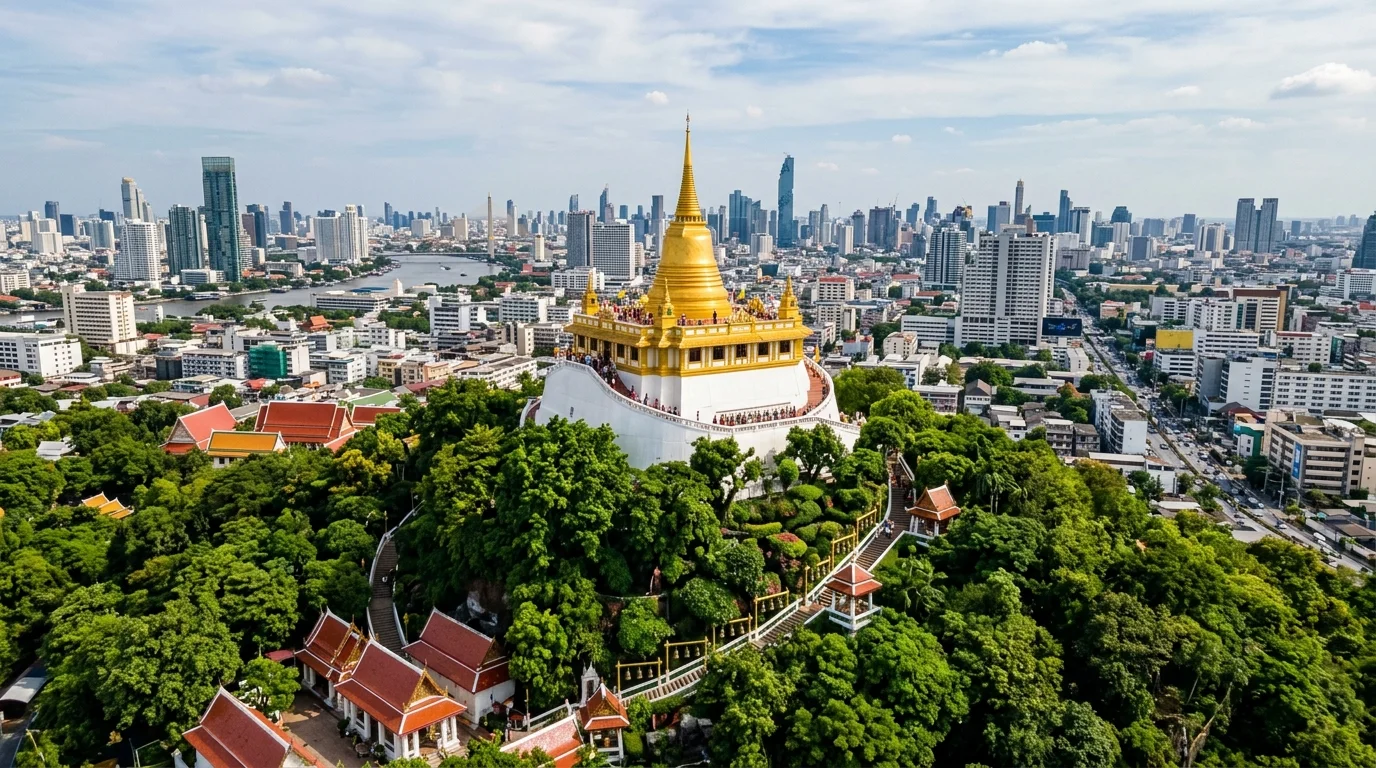
If you want a panoramic 360-degree view over historic Old Bangkok without paying steep cocktail prices at high-rise rooftop bars, head to Wat Saket, popularly known as The Golden Mount. Constructed upon an artificial hill in the 1800s after an earlier massive stupa collapsed into soft marshland soil, this 80-meter hill is crowned by a gleaming golden chedi housing sacred relics.
To reach the top terrace, visitors walk up a gentle, winding staircase of 318 paved steps wrapped around the green hillside. The pathway is shaded by tropical trees, cooling water misting systems, and hanging brass prayer bells that chime in the river breeze. As you climb higher, the traffic sounds of Old Bangkok fade away, replaced by peaceful bell chimes.
Once you step onto the top breezy deck, you are rewarded with a unobstructed view spanning from the low-rise terracotta roofs of Rattanakosin Island all the way to the glass high-rise skyline of Sukhumvit, Silom, and Sathorn.
Our Honest Expat Tip: If you visit Bangkok in November, Wat Saket hosts one of the city's oldest annual temple fairs during Loy Krathong. The Golden Mount is wrapped in bright red silk, while the base transforms into a festive night fair complete with local game booths, outdoor cinema screens, and legendary food stalls. Afterward, walk 5 minutes to Samran Rat to try Jay Fai's crab omelet or Thip Samai's famous Pad Thai.
Practical Info: Entry is 100 THB, open daily from 7:30 AM to 7:00 PM. Take the Saen Saep Canal Express Boat to Phanfa Leelard Pier right at the foot of the hill.
The Giant Bronze Buddha at Wat Paknam Phasi Charoen
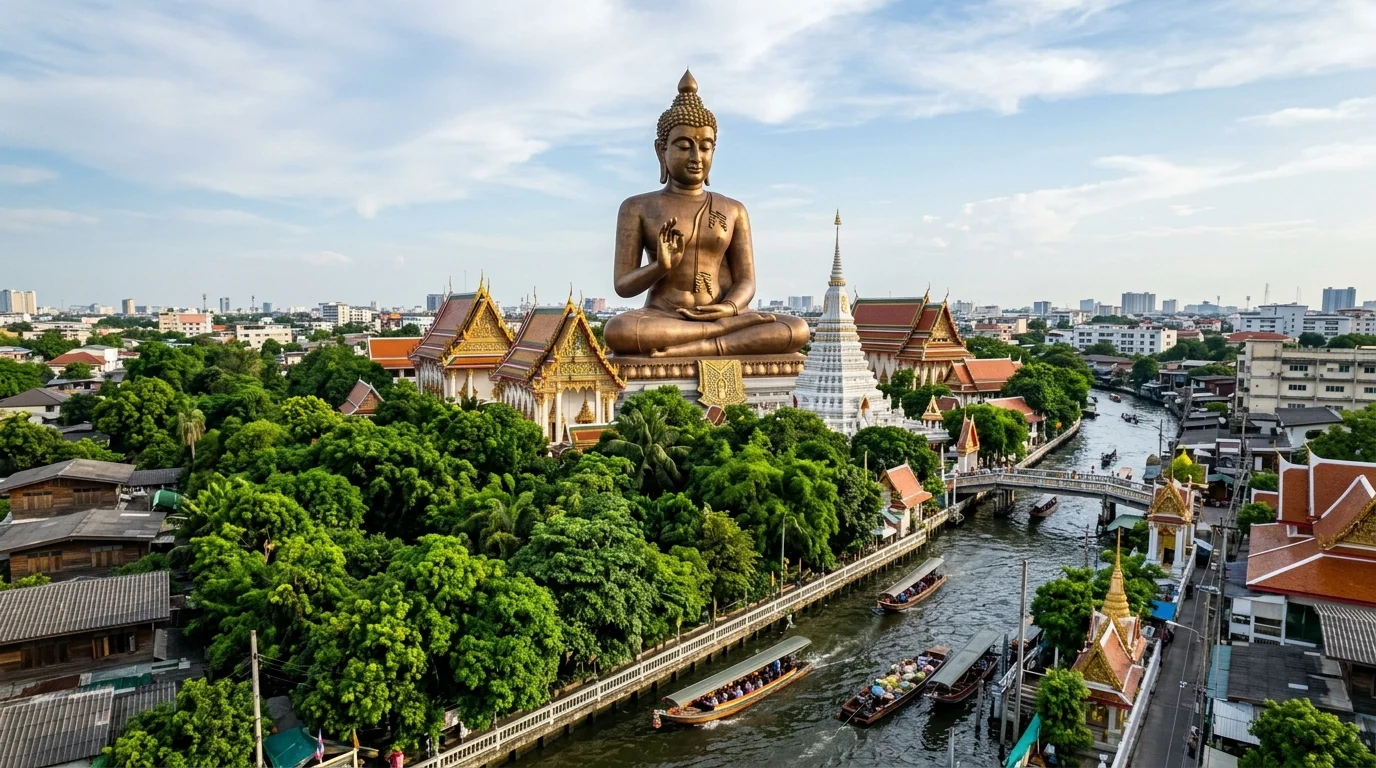
Tucked away in the quiet canal neighborhood of Thonburi, Wat Paknam Phasi Charoen has quickly become one of Bangkok's most photogenic spiritual sites. Dating back to the Ayutthaya period (1610), this royal temple complex achieved international fame following the completion of its colossal giant bronze Buddha statue.
Standing 69 meters tall (equivalent to a 20-story building) and measuring 40 meters wide at the lap, the Dhammakaya Thep Mongkol Buddha is constructed from pure bronze coated in gold leaf. Sitting in a serene meditation posture, the giant statue towers above the surrounding residential roofs and green tree canopy, visible from miles across western Bangkok.
In addition to the exterior statue, visitors must enter the adjacent five-story white glass pagoda (Maharatchamongkhon). On the top floor lies a breathtaking, glowing green glass stupa sitting beneath a hand-painted ceiling depicting the Buddhist cosmos filled with celestial constellations.
Our Honest Expat Tip: The most memorable way to view the statue is by hiring a private longtail boat for a 1-hour canal tour through Thonburi. As your boat turns the corner along the narrow waterway, the giant bronze Buddha suddenly looms overhead framed by traditional wooden stilt houses. You can also visit nearby Baan Silapin (The Artist's House) on the same boat run.
Practical Info: Admission is completely free, open daily from 8:00 AM to 6:00 PM. Take the BTS Skytrain to Bang Wa Station, followed by a quick 5-minute Grab ride or motorbike taxi.
Get Lost in Chatuchak Weekend Market
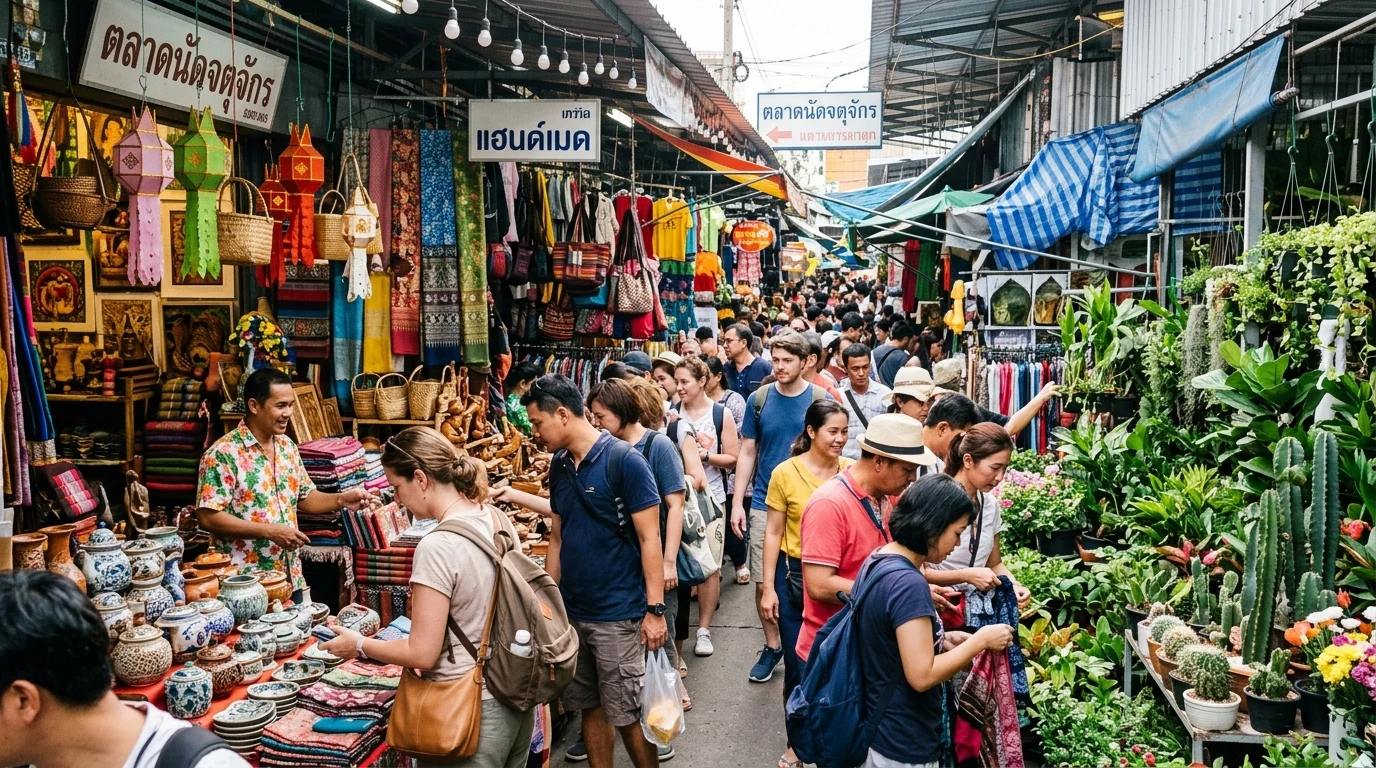
Welcome to the undisputed king of outdoor markets: Chatuchak Weekend Market (known locally as JJ Market). Spanning over 35 acres and divided into 27 distinct sections, Chatuchak features more than 15,000 stalls attracting over 200,000 shoppers every weekend. It is officially one of the largest open-air markets in the world.
You can find virtually anything here: vintage Levi's denim in Section 2 and 3, original local art in Section 7, handmade Thai ceramics and wooden tableware in Section 26, tropical houseplants, bohemian clothing, spices, and antique home decor. The market can feel like a giant labyrinth, but using the central Clock Tower as a landmark makes it easy to meet up if your group splits up.
Beyond shopping, Chatuchak is a incredible street food hub. You can refuel with bowls of authentic boat noodles, coconut ice cream served inside fresh coconut shells with sweet sticky rice, icy Thai milk tea (Cha Yen), grilled pork skewers (moo ping), and giant pans of seafood paella served by energetic local chefs.
Our Honest Expat Tip: Arrive around 9:00 AM on Saturday or Sunday when stalls first open. By noon, the narrow covered alleyways get intensely hot and crowded. Wear lightweight, breathable clothes, comfortable sneakers, and carry cash in Thai Baht as small stallholders do not take credit cards.
Getting There: Take the BTS Skytrain to Mo Chit Station (Exit 1) or the MRT Subway to Chatuchak Park Station (Exit 1). Both stations drop you right at the market gates.
Yaowarat Chinatown Street Food Night Safari
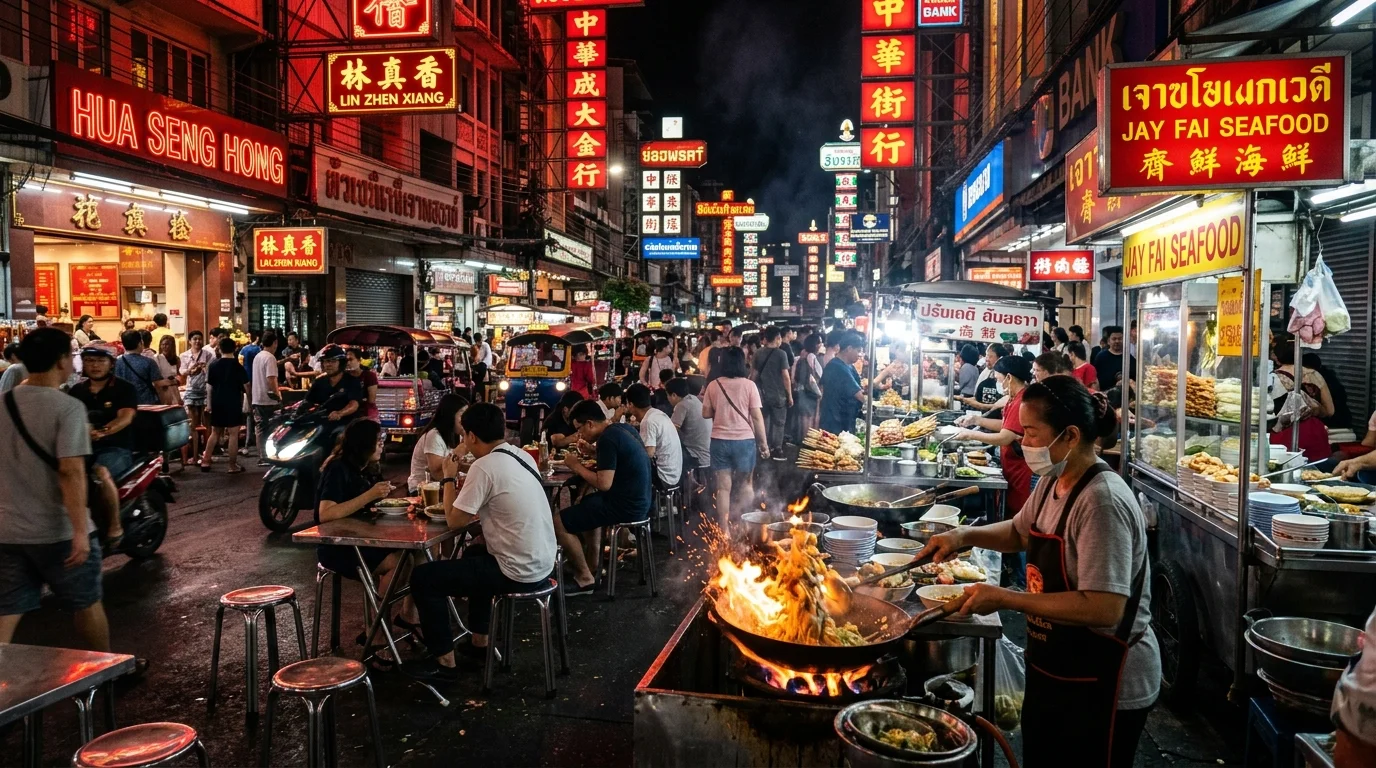
When night falls over Bangkok, Yaowarat Road transforms into one of the most exciting street food strips on earth. Established in 1782 when Chinese merchants relocated to the southeast bank of the Chao Phraya River, Bangkok's Chinatown is one of the oldest and largest Chinatowns in existence.
As twilight arrives around 6:00 PM, massive red and gold neon signs illuminate the main boulevard while hundreds of street vendors roll out pushcarts along the sidewalks. The air fills with aromatic wok smoke, charcoal fires, roasted sesame oil, and rich simmering broths.
Yaowarat is a culinary paradise for food lovers. Must-try local dishes include Kuay Chap (rolled rice noodles in a peppery broth with crispy pork belly at Nay Ek), Kuay Tiew Kua Gai (wok-fried chicken noodles at Soi Texas), open-air seafood at the famous T&K Seafood corner, charcoal-toasted buns filled with warm pandan custard, and sweet black sesame dumplings in ginger tea.
Our Honest Expat Tip: Don't sit down for one big meal at a single restaurant. Adopt a 'grazing strategy'—walk down the main strip and order 1 or 2 small dishes from 5 or 6 different pushcarts as you go. Afterward, wander down quiet Soi Nana (Chinatown's hip alleyway) for craft cocktails at bars like Ba Hao or Teens of Thailand.
Practical Info: Best visited Tuesday through Sunday from 6:00 PM to midnight (many stalls close on Mondays for street cleaning). Take the MRT Subway directly to Wat Mangkon Station (Exit 2).
Jodd Fairs Night Market for Trendy Eats & Volcano Ribs
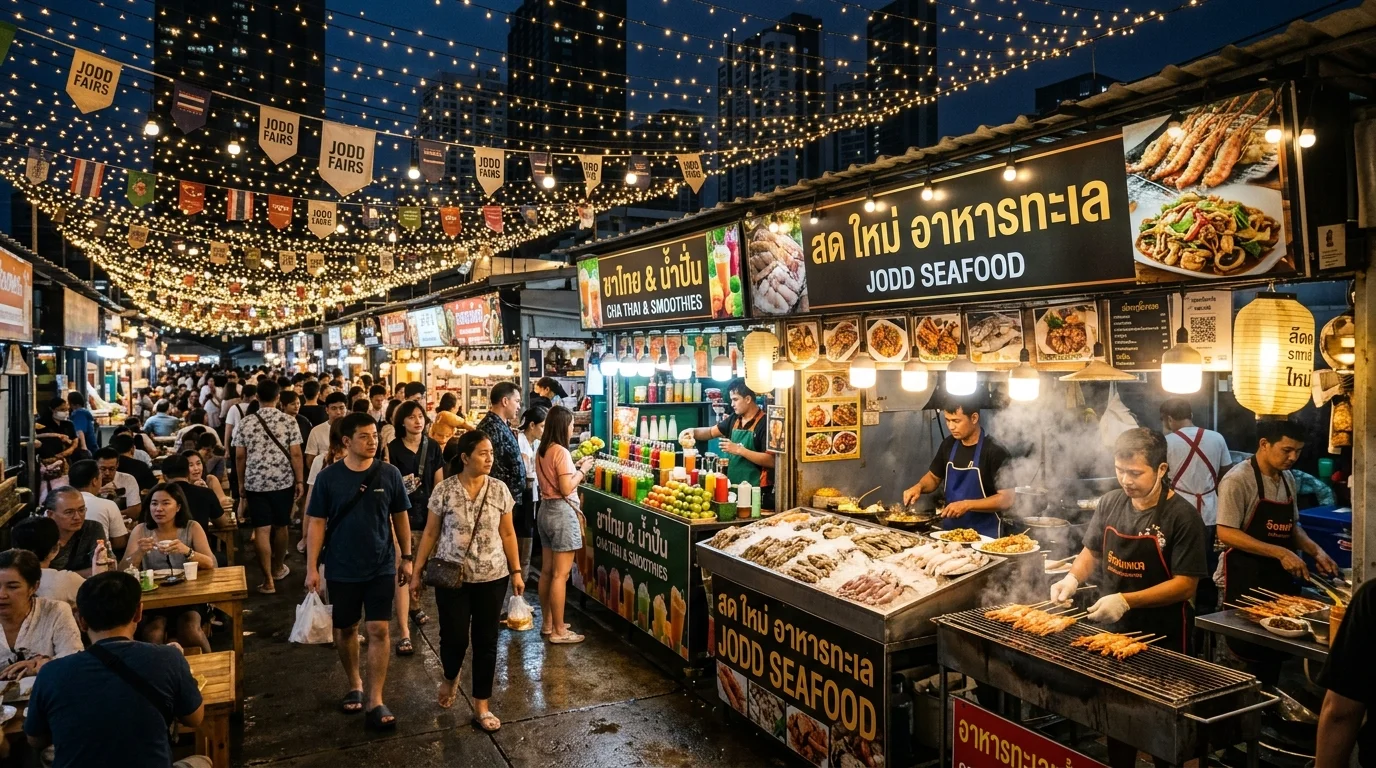
Representing the modern generation of Bangkok nightlife, Jodd Fairs has taken the city's night market scene by storm. Built as the spiritual successor to the famous Train Night Market (Ratchada), Jodd Fairs features organized rows of white canopy stalls lit up by romantic fairy lights.
It is a favorite evening hangout for young locals, university students, digital nomads, and expats looking for great food, trendy clothing, custom accessories, and outdoor drinks in a clean, vibrant setting.
The star dish of Jodd Fairs is Leng Saap (Volcano Spicy Pork Ribs). Giant pork spine bones are stacked into vertical mountain towers, drenched in clear pork broth, and covered with heaps of crushed green bird's eye chilies, lime juice, and cilantro. It is a spicy, tender feast that everyone eats with plastic gloves right at wooden communal tables. Other popular bites include soy-marinated raw salmon, grilled oysters with melted cheese, and fresh tropical fruit smoothie bowls.
Our Honest Expat Tip: Jodd Fairs gets extremely crowded after 7:30 PM. Arrive around 5:30 PM to wander the lanes comfortably and grab a dinner table before peak evening queues form. There is also a second location called Jodd Fairs DanNeramit in Phahonyothin featuring a vintage fairytale castle backdrop.
Getting There: Take the MRT Subway to Phra Ram 9 Station (Exit 2), then walk 3 minutes past the Central Rama 9 shopping complex.
Khlong Lat Mayom Floating Market & Canal Boat Tour
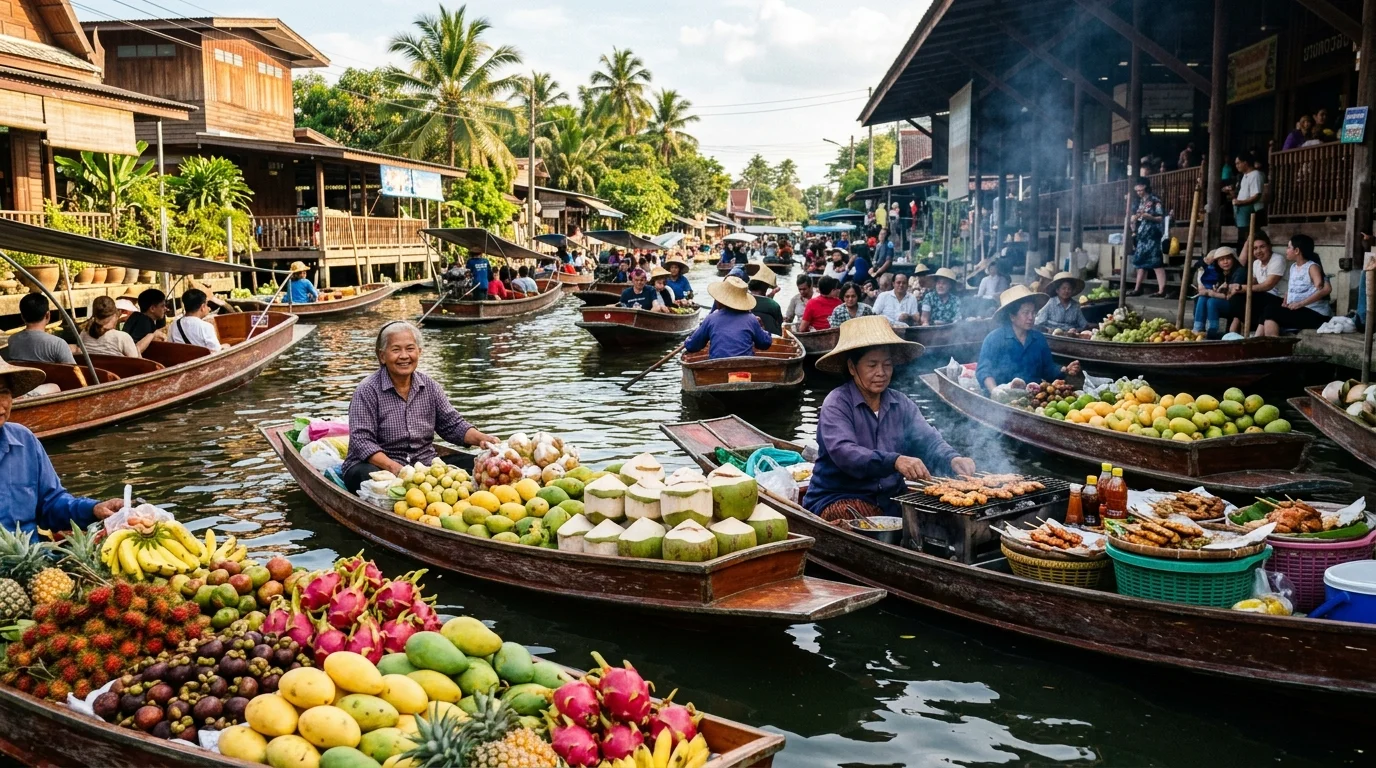
If you want to experience a floating market without taking a 2-hour van ride to tourist-heavy Damnoen Saduak, Khlong Lat Mayom is located right in Bangkok's western Taling Chan district. It is a genuine local weekend food sanctuary where Thai families gather to eat and relax by the water.
Unlike commercial floating markets filled with tourist trinkets, Khlong Lat Mayom is all about authentic food. Wooden longtail boats tie up along shaded canals while vendors cook fresh dishes directly from boat hulls—grilling giant river prawns, salt-crusted snakehead fish (Pla Pao), coconut pancakes (Khanom Krok), and savory oyster omelets (Hoi Tod).
After enjoying a waterside feast along the boardwalks, buy a 100 THB ticket for a 45-minute longtail boat tour. The boat glides quietly through lush green canals (khlongs) past orchid nurseries, traditional wooden stilt homes, and lotus ponds, giving you an authentic look at Bangkok's traditional riverside lifestyle.
Practical Info: Open Saturdays, Sundays, and public holidays from 8:00 AM to 5:00 PM. Take the MRT Subway to Lak Song Station, followed by a 15-minute Grab ride.
Maeklong Railway Market (The Folding Umbrella Market)
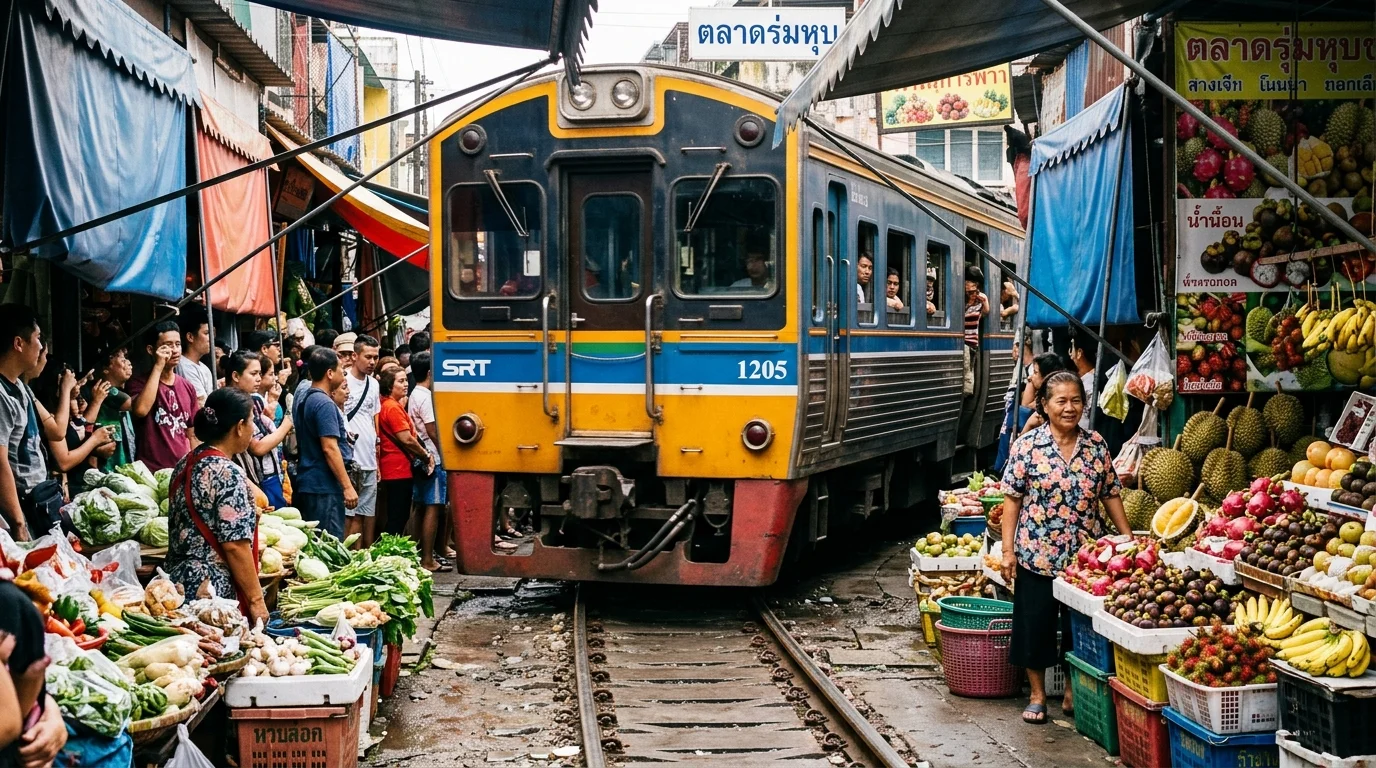
Maeklong Railway Market (known locally as Talad Rom Hoop, or 'The Folding Umbrella Market') delivers a sight you won't experience anywhere else in the world. Fresh fruit, vegetable, seafood, and spice stalls are set up directly on active train tracks.
Several times a day, a loud warning horn sounds across the market. Within seconds, stallholders calmly step forward, pull back their canvas awnings, and slide their produce baskets just inches away from the rails. The passenger train then chugs slowly through the middle of the narrow market line. As soon as the last carriage passes, vendors drop their awnings right back down and resume business as if nothing happened.
Located about 1.5 hours southwest of central Bangkok in Samut Songkhram, it makes an unforgettable day trip out of the city. Trains typically pass through the market four times daily (around 8:30 AM, 11:10 AM, 2:30 PM, and 3:30 PM).
Our Honest Expat Tip: Always check train arrival schedules before setting out. Stand well behind the painted red safety lines when the horn blows, and wear sturdy walking shoes as you will be stepping along uneven track stones. Combine this trip with a visit to nearby Amphawa Floating Market for a full day excursion.
IconSiam & SookSiam: Indoor Floating Market & Luxury
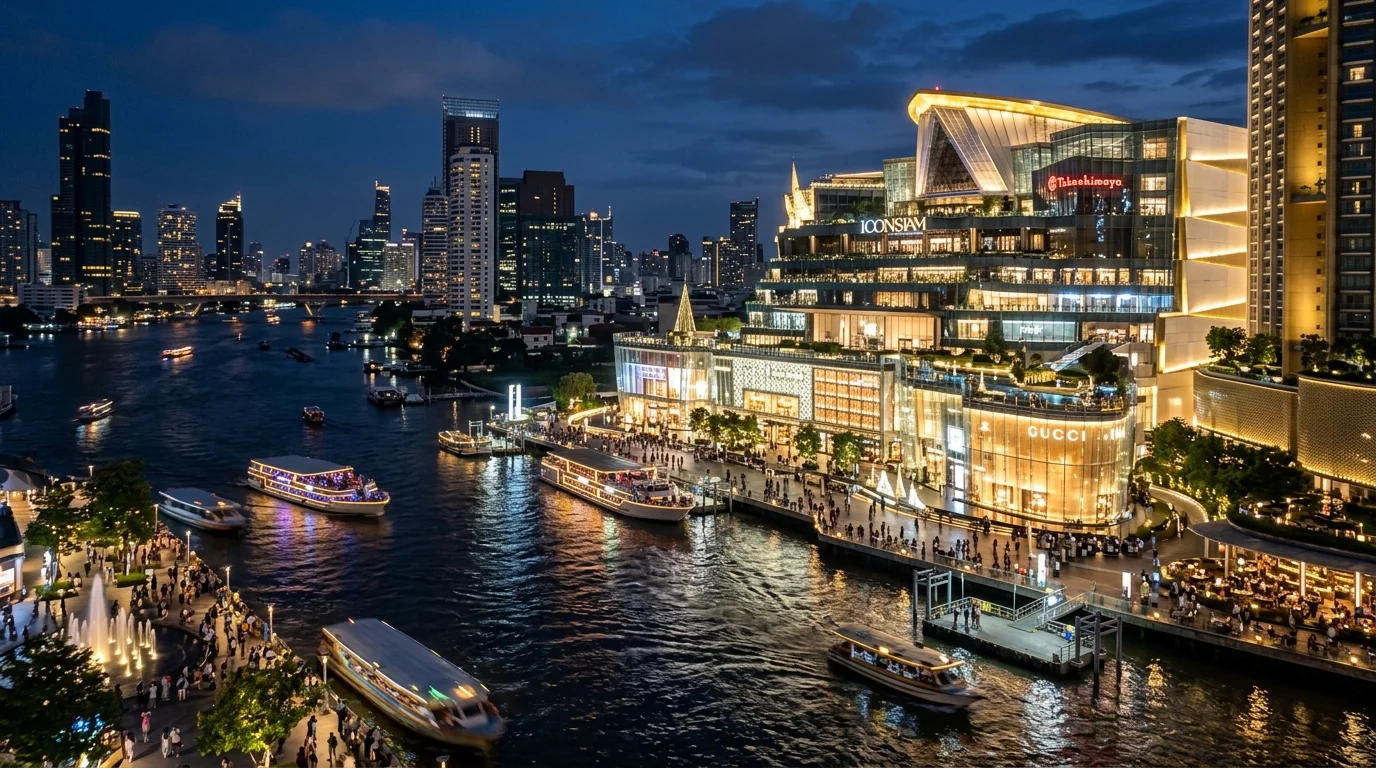
Sitting on the Thonburi bank of the Chao Phraya River, IconSiam is one of Bangkok's premier shopping, dining, and lifestyle destinations. But even if shopping isn't your main priority, IconSiam is worth visiting for SookSiam on the ground floor.
SookSiam is an indoor, air-conditioned cultural market that brings together street food vendors, regional dishes, and traditional handicrafts from all 77 provinces of Thailand. Designed with wooden longtail boats, floating pavilions, and regional architecture, it lets you sample authentic northern Khao Soi curry noodles, southern Massaman curry, Isaan Som Tum, and central Thai sweets in clean, air-conditioned comfort.
On the upper floors, IconSiam features world-class fashion flagships, an Apple Store with a outdoor garden terrace overlooking the river, and top-tier restaurants. At 6:30 PM and 8:00 PM every evening, the riverfront promenade hosts the Iconic Multimedia Water Feature—a light, sound, and fountain display right along the river.
Getting There: Take the BTS Skytrain to Saphan Taksin Station and hop on the free IconSiam shuttle boat from Sathorn Pier, or take the BTS Gold Line directly to Charoen Nakhon Station.
Chao Phraya River Evening Dinner Cruise
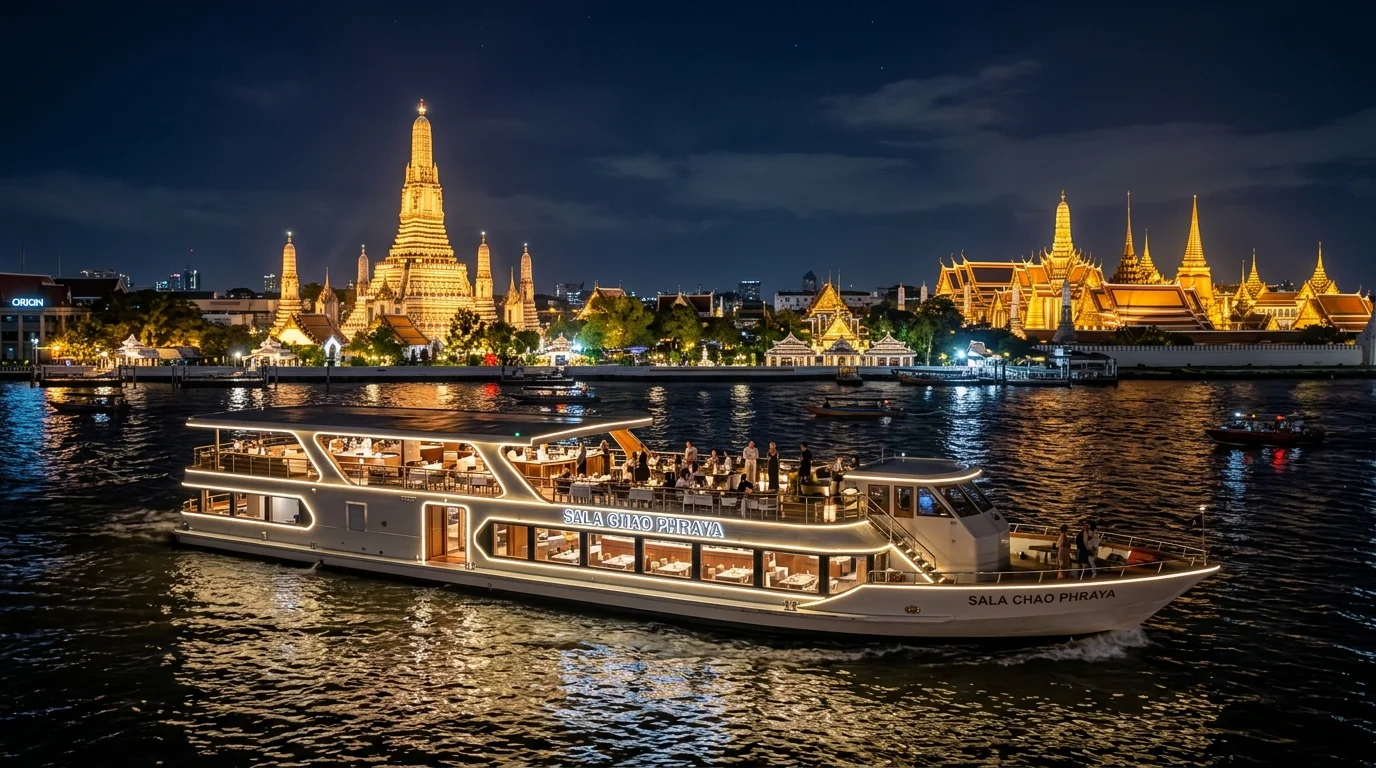
Seeing Bangkok from the Chao Phraya River at night gives you a completely fresh perspective on the city. As your vessel glides along the water, illuminated landmarks like Wat Arun, the Grand Palace, and the Rama VIII suspension bridge glow against the night sky.
River cruises cater to different styles. You can choose between larger multi-deck vessels featuring buffet dinners, live bands, and dancing (like Grand Pearl or Wonderful Pearl), or smaller, restored teak wood rice barges (like Manohra or Loy Nava) that offer intimate, multi-course Thai fine dining with candlelit seating.
Most dinner cruises depart between 7:00 PM and 7:30 PM from IconSiam Pier or River City Bangkok Pier and last roughly two hours. It is a relaxing way to wind down an evening after a full day of sightseeing without battling traffic.
Our Honest Expat Tip: If you want a quiet, romantic evening, book a traditional teak barge cruise rather than the large party boats. Advance reservations are recommended for weekend slots.
Practical Travel Tips & Etiquette
To wrap up our guide, here are essential practical tips from our local team to make your transition or vacation in Bangkok as seamless as possible:
Airport Arrival & Transit: If landing at Suvarnabhumi Airport (BKK), take the Airport Rail Link (ARL) from the basement level directly to Phaya Thai Station (connection to BTS) or Makkasan Station (connection to MRT Phetchaburi). It costs just 45 THB and saves you from 1 to 2 hours of heavy highway traffic. If landing at Don Mueang (DMK), take the SRT Red Line or the A1 Express Bus directly to Mo Chit BTS.
Mobile Data & SIM Cards: Buy an e-SIM or physical AIS or TrueMove tourist SIM card upon landing at the airport, or visit a 7-Eleven with your passport. AIS generally offers the fastest 5G coverage across Bangkok and the Thai islands.
Transport Strategy: Use the BTS Skytrain and MRT Subway to bypass Bangkok's notorious rush-hour traffic jams (8:00–9:30 AM & 5:00–7:30 PM). For short trips down long side streets (sois), jump on a Win motorbike taxi wearing an orange vest. For longer rides, download Grab or Bolt for transparent, fixed pricing.
Temple Etiquette: Always cover your shoulders and knees before entering sacred temple halls. Remove your shoes when stepping onto wooden or carpeted shrine floors, and sit with your legs tucked behind or beside you—never point the soles of your feet directly at a Buddha image or person.
Money & Payments: Foreign credit cards are accepted at major malls and hotels, but cash (THB) is essential for street food, night markets, and BTS ticket machines. Foreign debit cards incur a 220 THB ATM fee per withdrawal, so withdraw larger amounts at once to minimize fees. If living here long-term, opening a local bank account lets you pay using PromptPay QR codes everywhere.
Weather & Seasons: Bangkok is warm year-round. The Cool Season (Nov–Feb) offers pleasant breezes and low humidity. The Hot Season (March–May) reaches 38°C+, so carry water and take afternoon breaks in air-conditioned cafes. The Monsoon Season (June–Oct) brings short, heavy afternoon rain showers—keep a light raincoat or compact umbrella handy in your day bag.
Planning a long-term stay or move to Bangkok?
Explore verified condo rentals and neighborhood price breakdowns directly from our NHP team.
Browse Bangkok Properties →Get Bangkok guides in your inbox
Subscribe to receive honest neighbourhood comparisons, expat tips, and hidden local gems, straight from our Bangkok team.