Thailand Retirement Visa (Non-OA): Everything You Need to Know in 2026
If you are 50 or older, the retirement visa is the most straightforward path to living in Thailand long-term. Unlike other visas, it does not require employment or a massive business investment. However, the financial and insurance rules are strict, and they must be followed precisely to avoid visa rejection or problems at immigration. Here is the complete expat guide to the Non-O and Non-OA retirement visas in 2026.
In this guide:
1. The Non-O vs Non-OA Retirement Visa
The Non-O visa is typically applied for inside Thailand at a local immigration office. It requires a lower financial deposit and has simpler insurance requirements. The visa is initially granted for 90 days, then extended for 1 year.
The Non-OA visa is applied for in your home country at a Royal Thai Embassy or Consulate. It allows you to enter Thailand for 1 year immediately but has strict health insurance requirements (minimum coverage of USD 100,000 for emergency medical treatment).
You must also provide a medical certificate showing you do not carry certain prohibited illnesses (such as third-stage syphilis, tuberculosis, elephantiasis, or drug addiction) and a criminal record clearance certificate issued by the police department of your home country.
2. The Financial Requirements: How to Prove Funding
To qualify, you must show financial security using one of two methods: the Deposit Method or the Income Method.
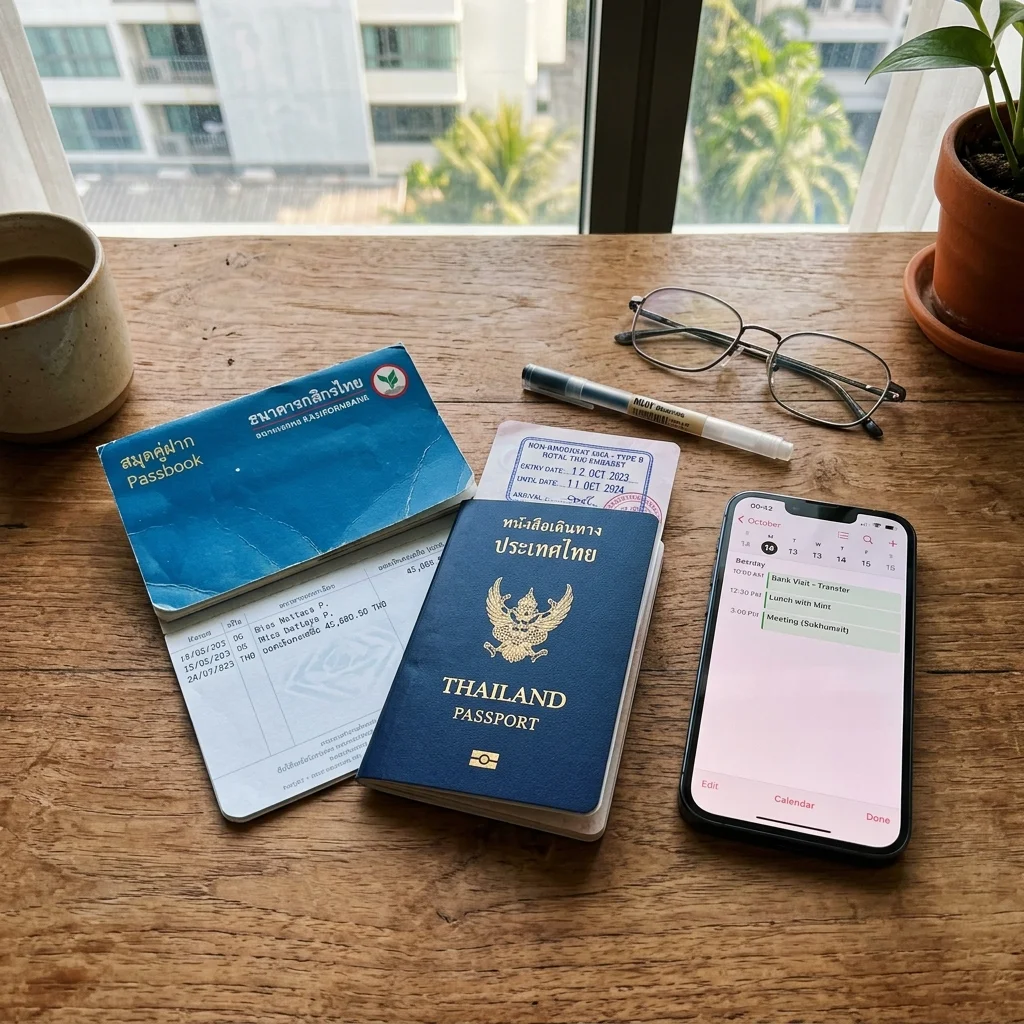
For the Deposit Method, you must keep at least ฿800,000 in a Thai bank account in your name. The money must be in the account for at least two months before the application and for three months after the visa is granted. The bank must issue a confirmation letter, and you must update your passbook on the day of the application.
For the Income Method, you must show a monthly pension or pension income of at least ฿65,000, verified by your embassy or bank statements showing regular international transfers into a Thai bank account.
3. Health Insurance, Re-Entry Permits & 90-Day Reporting
For the Non-OA visa, you must hold a valid Thai health insurance policy that covers inpatient treatment up to ฿3,000,000 (roughly USD 100,000). Many local insurers offer approved policies specifically for this visa.
Once living here, you must report your current address to Thai Immigration every 90 days (known as 90-Day Reporting). This can be done online, by mail, or in person at your local immigration office, and is a simple but mandatory requirement for all long-term residents.
Additionally, if you plan to travel outside Thailand, you must purchase a Re-entry Permit (฿1,000 for single entry, ฿3,800 for multiple entry) before you leave. Leaving the country without a re-entry permit will automatically cancel your retirement visa.
Need help finding a retirement home?
Discover spacious, secure condos for rent in Bangkok's best expat residential zones.
Browse Listings →Get Bangkok guides in your inbox
Subscribe to receive honest neighbourhood comparisons, expat tips, and hidden local gems, straight from our Bangkok team.
More guides
Retiring in Bangkok vs Chiang Mai vs Hua Hin: A Comparison for Foreign Retirees
Best Bangkok Neighbourhoods for Retirees: Quiet, Walkable, and Close to Healthcare