Cost of Living in Bangkok 2026: A Realistic Monthly Budget
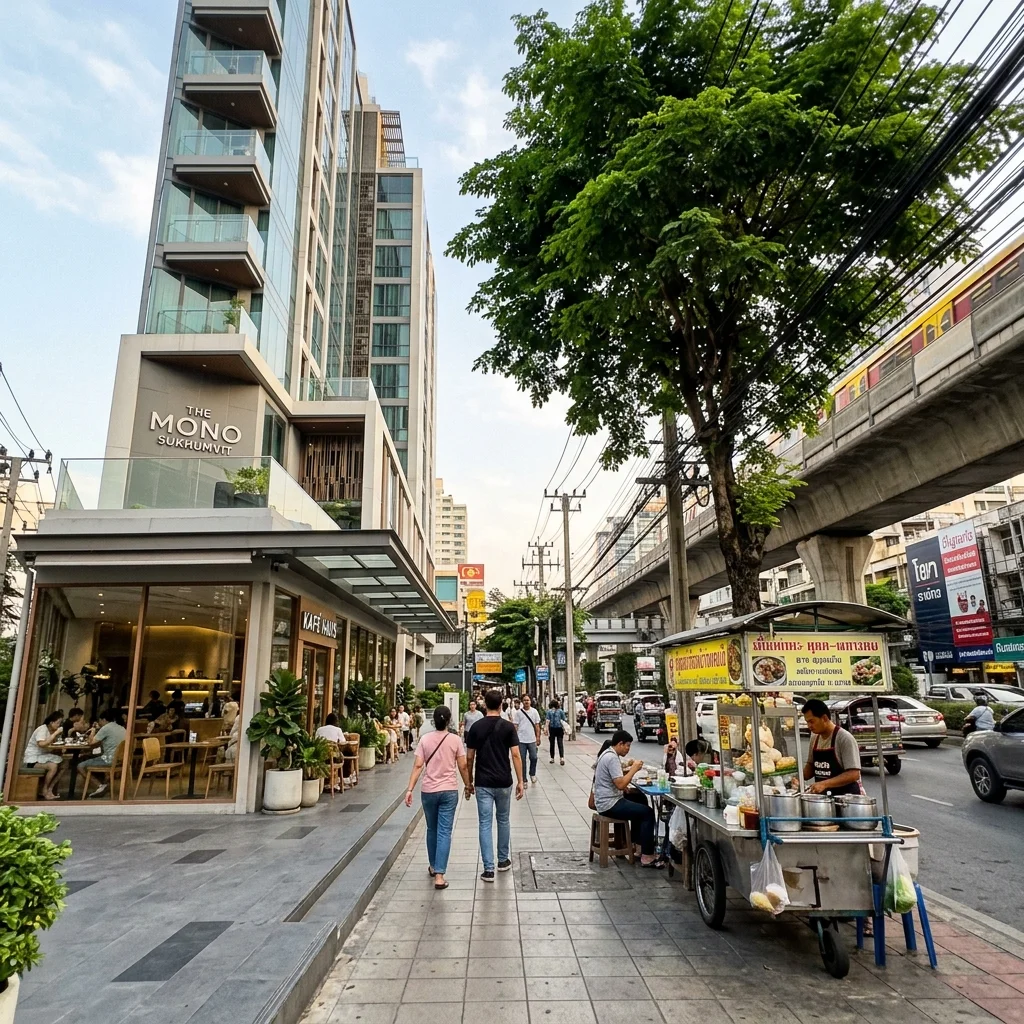
Bangkok is famous for offering a high quality of life at a fraction of the cost of Western cities. You can eat a spectacular meal of garlic pork and rice for ฿50 on the street, then walk across the road and buy a ฿200 craft beer at a design bar. It is a city of contrasts, and your monthly cost of living depends entirely on your lifestyle choices. Whether you are a digital nomad on a budget, an expat teacher, or a corporate executive, here is a realistic monthly budget breakdown for 2026.
In this guide:
1. Housing & Rental Costs: Studio vs. Luxury Condo
Housing is your largest monthly expense. Rent in Bangkok varies significantly depending on the district, proximity to mass transit (BTS Skytrain/MRT Subway), and the age of the building. In 2026, a modern, fully furnished 30-square-meter studio condo in an expat hub like On Nut or Lat Phrao ranges from ฿12,000 to ฿16,000 per month. If you move closer to the prime commercial districts like Phrom Phong, Thong Lo, or Asok, the same space will cost between ฿22,000 and ฿35,000.
For those relocating as a family, a spacious 2-bedroom or 3-bedroom apartment (roughly 80 to 120 sqm) in family-friendly zones like Ekkamai, Phrom Phong, or Sathorn ranges from ฿45,000 to ฿85,000 per month. Renting a standalone house or townhouse in gated suburban estates (like Nichada Thani in Pak Kret) begins around ฿60,000 and can easily reach ฿150,000+ for large villas near international schools.
Most rental agreements require a minimum 12-month contract, a 2-month security deposit, and the first month's rent paid in advance. Condos always come fully furnished, including a TV, refrigerator, microwave, and air-conditioning units.
2. Utility Bills: The Air-Con Factor
Utilities in Bangkok are cheap, except for electricity. High-speed home fiber internet (1 Gbps speed) is extremely reliable and costs around ฿599 to ฿799 per month, which includes a basic TV router package. Water bills are negligible, typically ฿100 to ฿200 per month for a single occupant or couple, calculated based on flat building rates (usually ฿18 to ฿22 per unit).
Electricity is the ultimate wildcard, managed by the Metropolitan Electricity Authority (MEA). The standard government rate is roughly ฿4.2 to ฿4.7 per kilowatt-hour (kWh). If you work from home and run multiple inverter air-conditioners 24/7, expect a monthly electricity bill of ฿3,500 to ฿6,000. However, if you only run the air-con in the evenings while you sleep, your bill will stay between ฿1,200 and ฿1,800 per month. In older buildings, check if they charge direct MEA rates or if the landlord adds a surcharge (some serviced apartments charge ฿7 to ฿9 per unit, which can double your bill).
3. Food & Groceries: Local Street Food vs. Imported Goods
If you eat like a local, you can live on a very small food budget. Street food and local shophouse dining cost ฿50 to ฿80 per meal, meaning you can eat well for ฿6,000/month. A simple dish of Pad Kra Prow (basil chicken) with a fried egg is ฿60. Fresh fruit from street carts (mango, pineapple, papaya) is ฿20 to ฿30 per bag.
If you prefer Western food, international dining, and imported groceries, your budget will increase. A mid-range Western meal costs ฿300 to ฿600, and gourmet groceries at Villa Market or Foodland are priced similarly to Western countries, easily pushing your monthly food budget to ฿15,000+. Imported cheese, butter, beef, and foreign cereals carry heavy import duties, sometimes costing double their price in the US or Europe.
4. Commuting & Transport
Transport is cheap. Commuting by BTS Skytrain or MRT Subway costs ฿15 to ฿59 per trip, typically averaging ฿2,000/month for daily commuters. Motorcycle taxis (Win) cost ฿20 to ฿50 for quick trips down the sois.
Taxis are metered, starting at ฿35. A 10-kilometer ride across town during non-peak hours costs about ฿120 to ฿150. Ride-hailing apps like Grab and Bolt are widely used, but during peak hour traffic jams, the BTS or MRT is much faster.
5. Lifestyle Budgets: Standard vs. Premium Monthly Expenses
The Budget Nomad (฿35,000/month / ~$1,000 USD): Rent in On Nut or Udom Suk (฿12,000), local street food, public transport, and casual nights out. Comfortable, local, and highly active.
The Mid-Range Expat (฿75,000/month / ~$2,100 USD): Rent a modern 1-bed in Ari or Phrom Phong (฿25,000), mix of street food and Western dining, gym membership, weekend trips, and air-con at night.
The Premium Expat (฿150,000+/month / ~$4,200 USD): Luxury high-rise condo in Thong Lo (฿50,000), fine dining, taxi transport, premium health insurance, and frequent travel. Offers a world-class lifestyle.
Calculate your property budget
Filter listings by price to see exactly what your monthly budget unlocks in Bangkok.
Browse Listings →Get Bangkok guides in your inbox
Subscribe to receive honest neighbourhood comparisons, expat tips, and hidden local gems, straight from our Bangkok team.